
Published preclinical records
Research literature & evidence notes
This index places every catalog material in its broad research context and records only animal studies whose full-text methods identify both the tested compound and animal-research oversight.
Receptor pharmacology
Metabolic receptor analogues
Dual- and triple-incretin-receptor research materials, kept distinct from approved or investigational finished medicines.
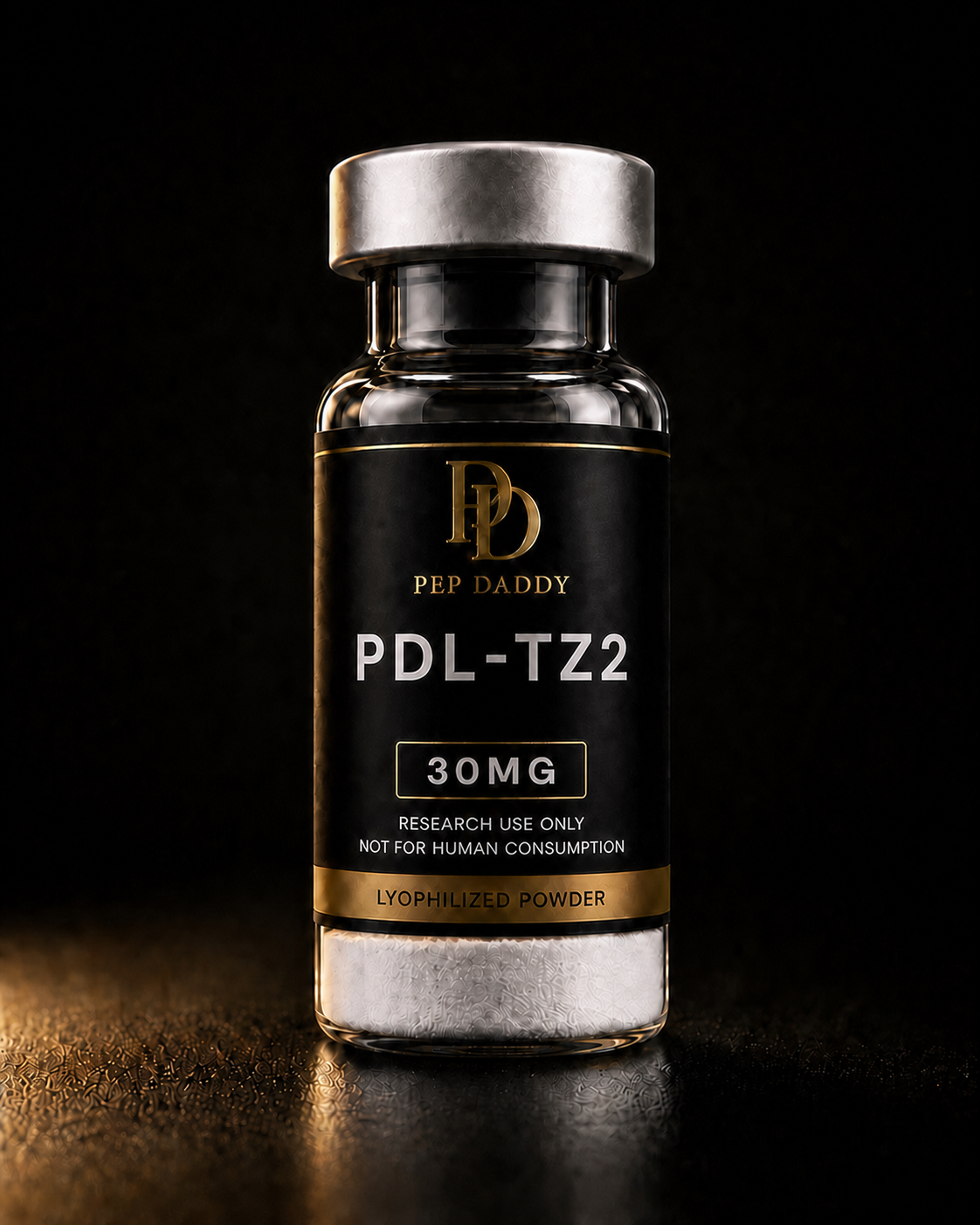
PDL-TZ2 30 mg
- Study context
- A synthetic analogue in the dual incretin-receptor research class; the underlying analyte has receptor-pharmacology and regulated drug-development literature.
- Evidence boundary
- A catalog alias and shared research class do not establish equivalence to an approved medicine or suitability for any use.
- Animal model
- Diet-induced-obese male C57BL/6J mice maintained on a 60%-fat diet.
- Measured in that study
- Brown-adipose-tissue amino-acid metabolism, metabolite profiles, body weight, and food intake.
- Research oversight
- The Methods report Eli Lilly and Company Institutional Animal Care and Use Committee approval.
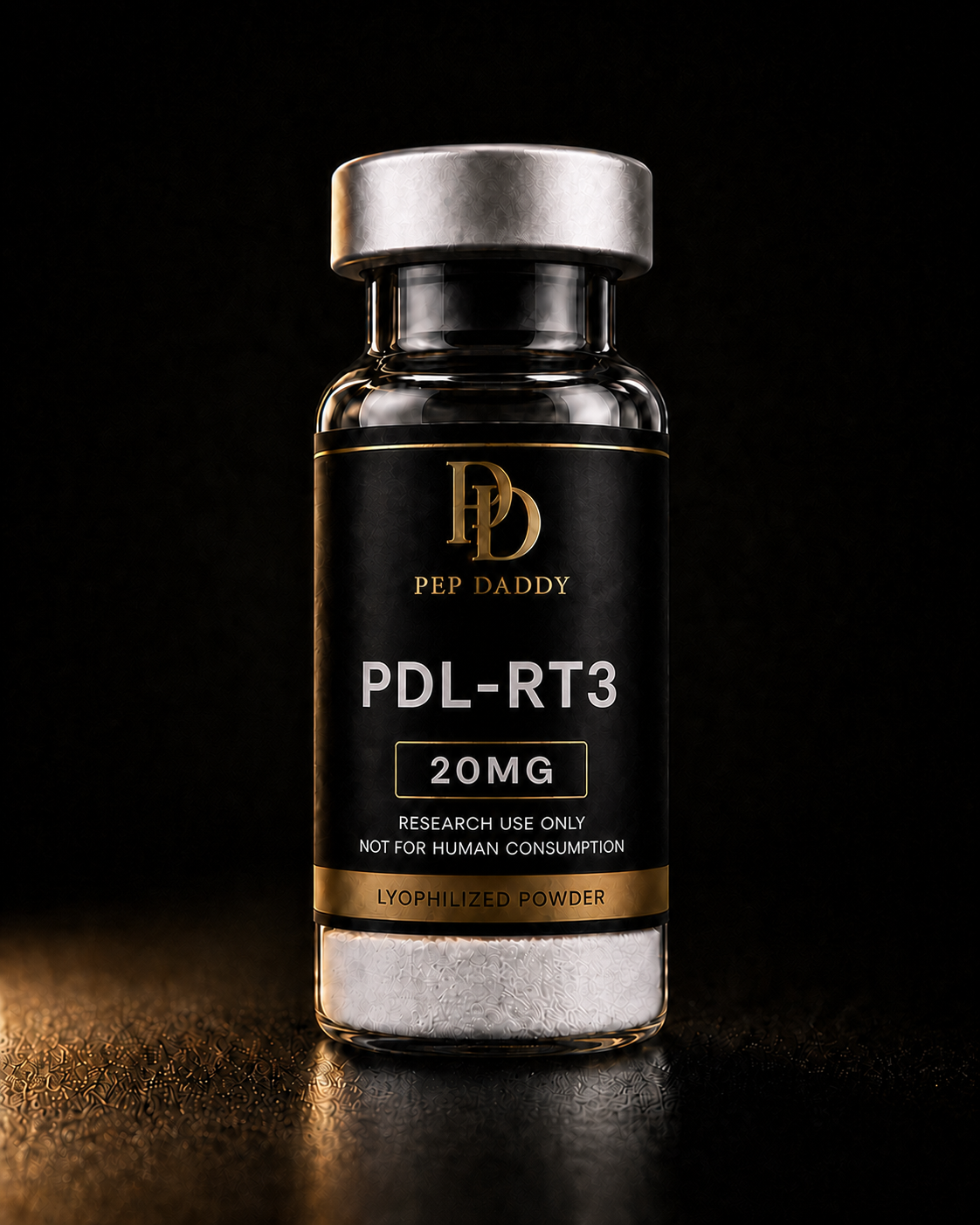
PDL-RT3 20 mg
- Study context
- A synthetic analogue in the triple incretin-receptor research class, studied in receptor, metabolic, and investigational drug-development settings.
- Evidence boundary
- Investigational findings do not establish a general safety profile or an outcome for a catalog material.
- Animal model
- Diet-induced-obese male C57BL/6 mice, 24–25 weeks old.
- Measured in that study
- Body weight, food intake, body composition, and metabolic measures.
- Research oversight
- The STAR Methods report Eli Lilly IACUC approval and care under the NIH Guide.
Cellular energy
Mitochondrial & bioenergetics research
Mitochondrial peptides and a redox coenzyme grouped by their cellular-energy research context.
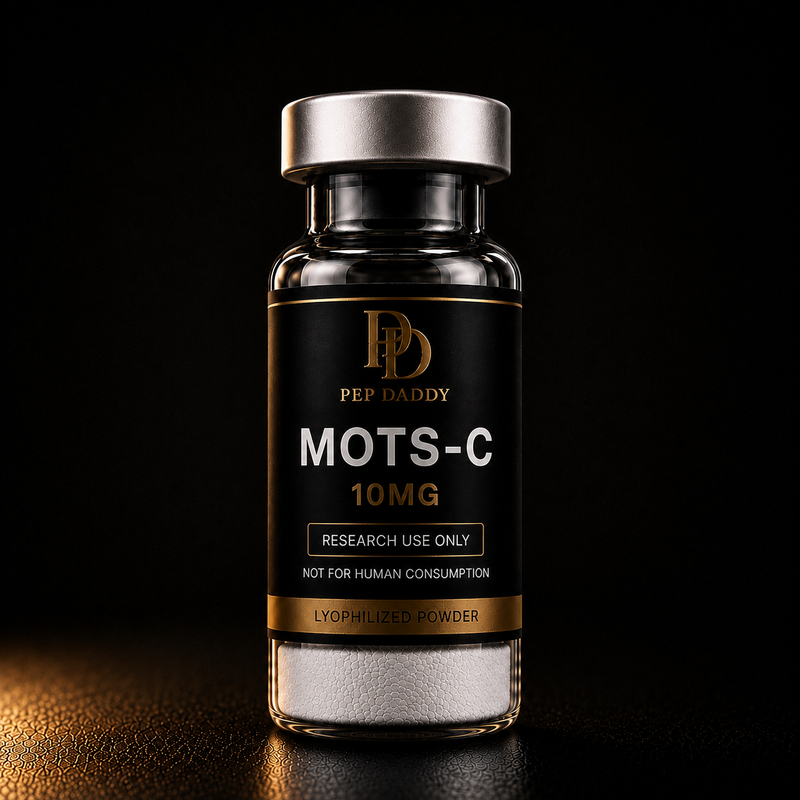
MOTS-c 10 mg
- Study context
- A mitochondrial-derived peptide discussed in cellular-energy, stress-response, and metabolic-model literature.
- Evidence boundary
- Much of the literature is preclinical; mechanistic findings should not be translated into a human-use recommendation.
- Animal model
- Seventeen-week-old male C57BL/6NJ mice maintained on a high-fat diet from five weeks of age.
- Measured in that study
- Plasma metabolites, blood glucose, body weight, food intake, and insulin-related measures.
- Research oversight
- The Methods report compliance with the University of Southern California Animal Care and Use Committee.
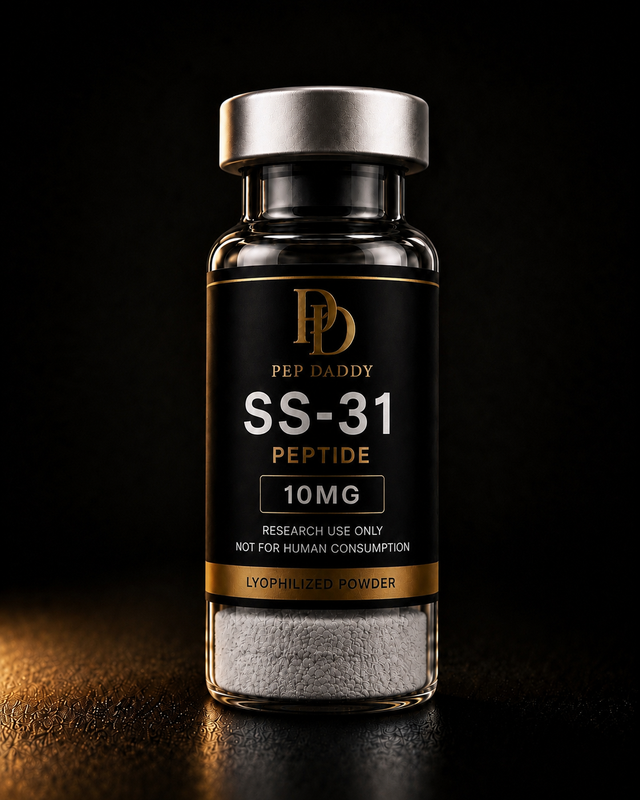
SS-31 10 mg
- Study context
- A Szeto-Schiller peptide associated with cardiolipin and mitochondrial-membrane research, including formal clinical development under another name.
- Evidence boundary
- Clinical endpoints have been mixed, and a research vial is not a prescription product or evidence of therapeutic suitability.
- Animal model
- Adult male C57BL/6 mice in an LPS neuroinflammation model.
- Measured in that study
- Hippocampal mitochondrial, inflammatory, synaptic, structural, and behavioral endpoints.
- Research oversight
- The Methods report Chinese PLA General Hospital IACUC approval and NIH-guideline compliance.
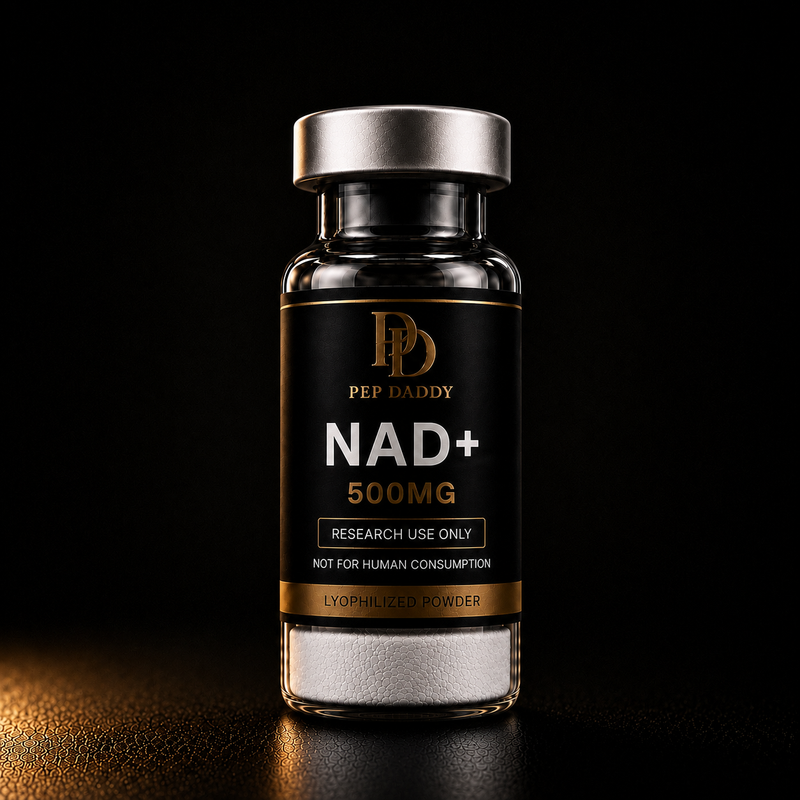
NAD+ 500 mg
- Study context
- An established cellular redox coenzyme studied across metabolism, DNA-response, and enzyme-substrate research.
- Evidence boundary
- Established biochemistry does not prove that supplying the molecule externally produces a particular organism-level outcome.
- Animal model
- Eight- to ten-week-old female C57BL/6-background mice in a MOG-induced EAE model.
- Measured in that study
- Clinical progression, demyelination, inflammatory infiltration, and axonal and myelin measures.
- Research oversight
- The Methods report that animal use and care complied with NIH and IACUC guidelines.
Structure and response
Tissue & matrix research
Short peptides, fragments, copper-peptide material, and a multi-peptide blend grouped by their laboratory research context.
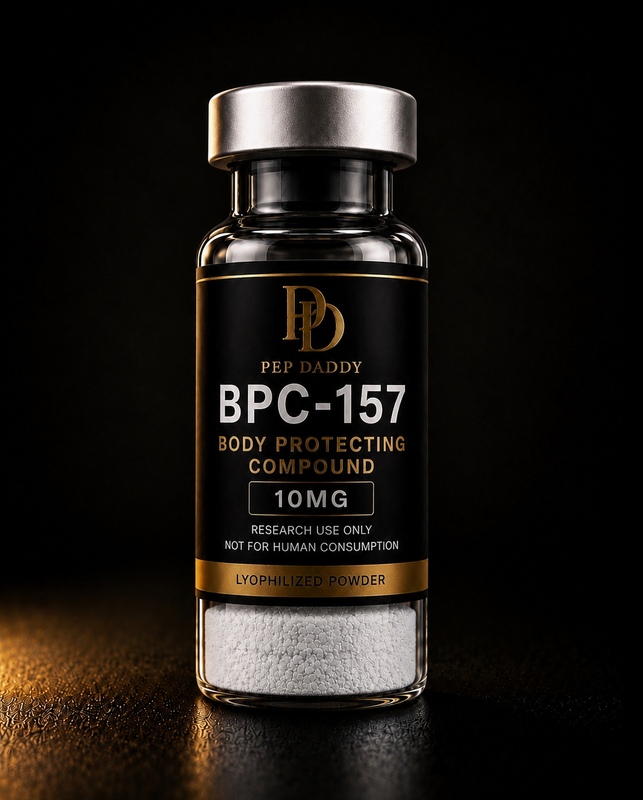
BPC-157 10 mg
- Study context
- A synthetic pentadecapeptide represented mainly in cell and animal tissue-injury research models.
- Evidence boundary
- Preclinical findings do not establish human safety or efficacy.
- Animal model
- Approximately six-week-old Sprague-Dawley rats of both sexes in a pharmacokinetic and ADME study.
- Measured in that study
- Plasma concentration-time profile, half-life, bioavailability, metabolism, excretion, and tissue distribution.
- Research oversight
- The Methods report CFDA good-laboratory-practice compliance and care under the Guide for the Care and Use of Laboratory Animals.
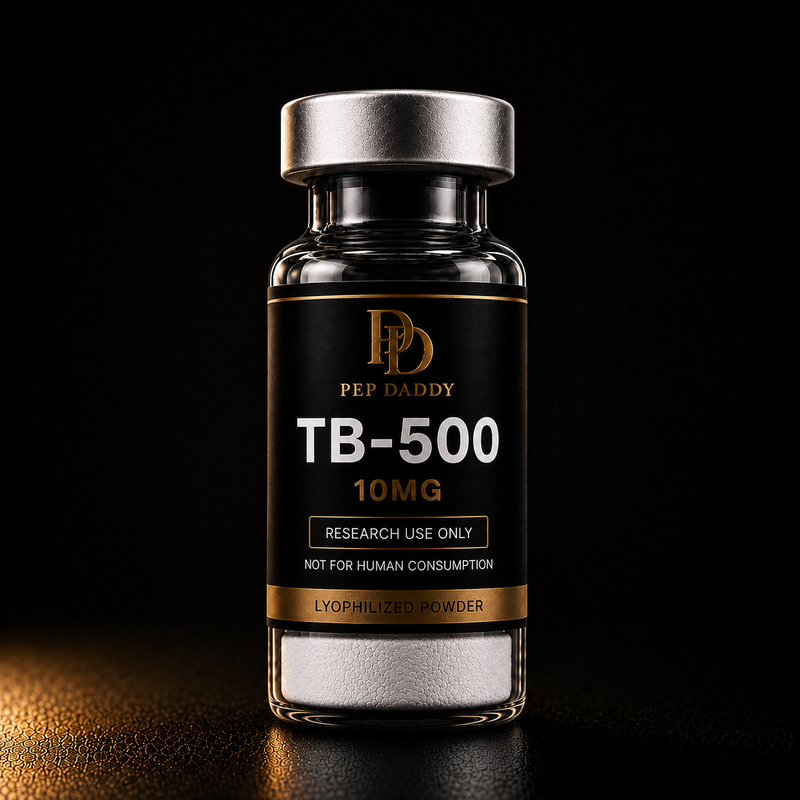
TB-500 10 mg
- Study context
- A synthetic peptide related to an actin-binding region of thymosin beta-4 and discussed in cytoskeletal and tissue-model literature.
- Evidence boundary
- It is not the full-length thymosin beta-4 sequence, and findings about one material should not be assigned to the other.
No exact-fragment record is included. A located animal paper using material labelled TB-500 did not identify the Ac-LKKTETQ sequence or acetylation state; evidence for full-length thymosin beta-4 is not transferred to this fragment.
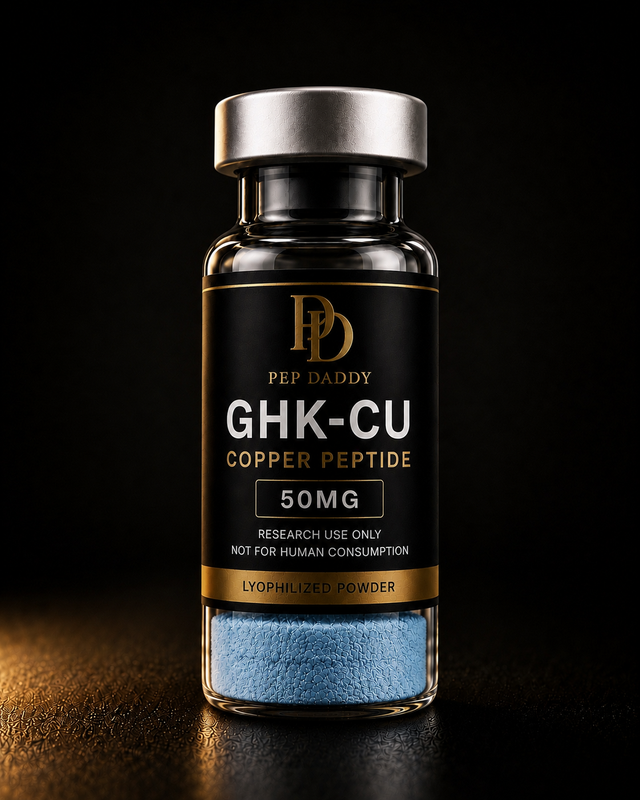
GHK-Cu 50 mg
- Study context
- A copper-coordinated tripeptide represented in biochemical, cell-culture, and extracellular-matrix research.
- Evidence boundary
- Results depend on chemical form, model, and endpoint and should not be generalized beyond those conditions.
- Animal model
- Male C57BL/6J mice in a 12-week cigarette-smoke exposure model.
- Measured in that study
- Lung morphometry, inflammatory mediators, oxidative-stress measures, and NF-κB and Nrf2 pathway markers.
- Research oversight
- The Methods report China Medical University Animal Care and Use Committee approval, issue KT2021639.
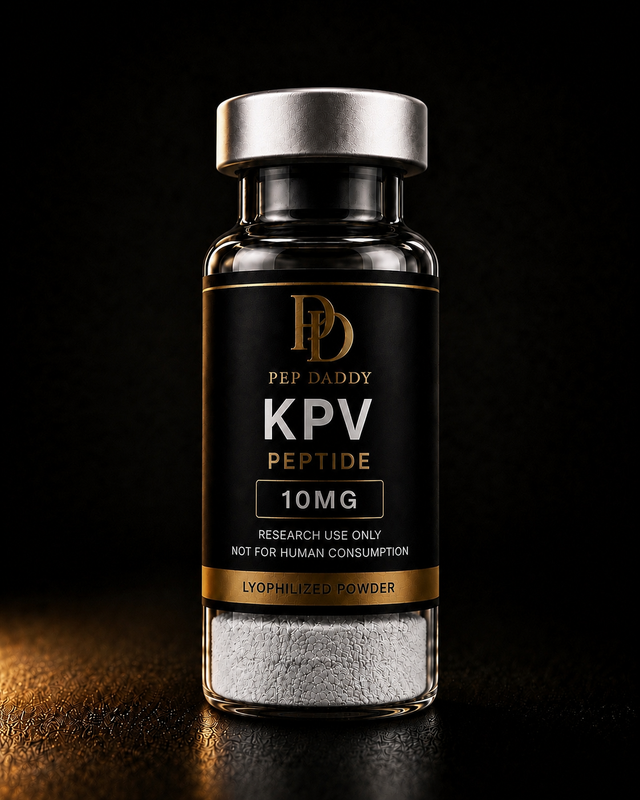
KPV 10 mg
- Study context
- A three-residue melanocortin fragment studied primarily in cell and animal inflammatory-signaling models.
- Evidence boundary
- Short-sequence identity and preclinical observations do not establish clinical safety or effectiveness.
- Animal model
- Eight-week-old female wild-type and PepT1-knockout mice in an AOM/DSS colitis-associated carcinogenesis model.
- Measured in that study
- Colon tumor number, size and burden, intestinal inflammation, and dependence on PepT1.
- Research oversight
- The Methods report Georgia State University IACUC approval under permits A14010 and A14007.
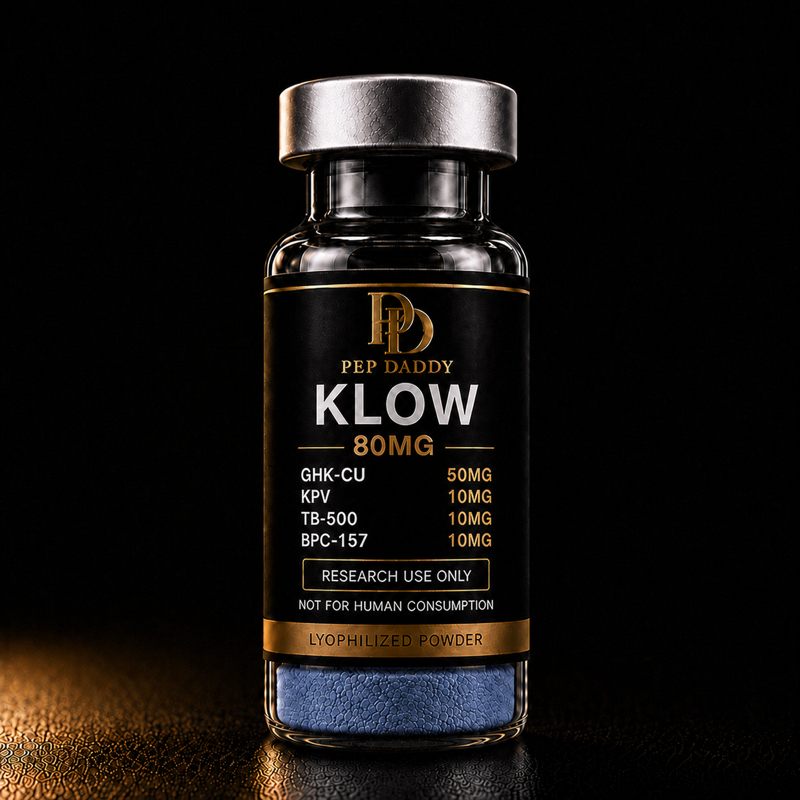
KLOW 80 mg
- Study context
- A combined research material containing GHK-Cu, KPV, TB-500, and BPC-157 in one vial.
- Evidence boundary
- Evidence about separate ingredients cannot be assumed to describe a mixture, its interactions, or its analytical behavior.
No peer-reviewed in-vivo study was verified for this exact four-component blend. Studies of individual ingredients or smaller combinations are not evidence for the mixture.
Receptor and endocrine models
Growth-signaling research
GHRH analogues, secretagogue-class material, and an engineered IGF analogue presented as distinct research records.
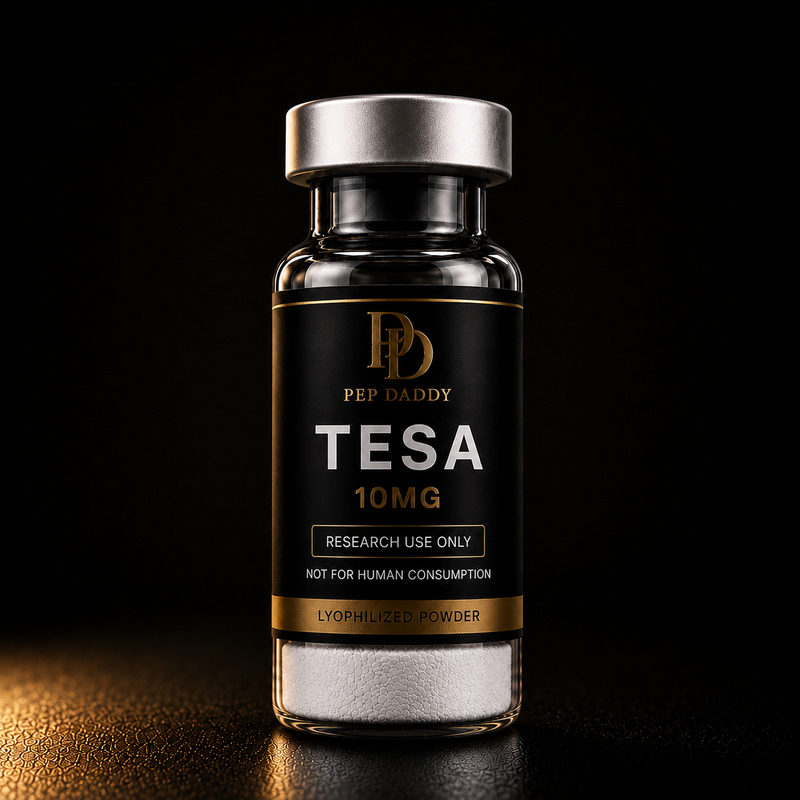
TESA 10 mg
- Study context
- A modified GHRH analogue with receptor, endocrine, and regulated clinical literature for a narrowly defined prescription context.
- Evidence boundary
- A catalog research material is not a prescription product, and clinical labeling must not be generalized to it.
- Animal model
- Wistar rats weighing 200–300 g in a qualitative plasma-detection study.
- Measured in that study
- Qualitative plasma detection and metabolic stability of intact tesamorelin.
- Research oversight
- The Methods report ethical-committee approval and compliance with EU Directive 2010/63/EU.
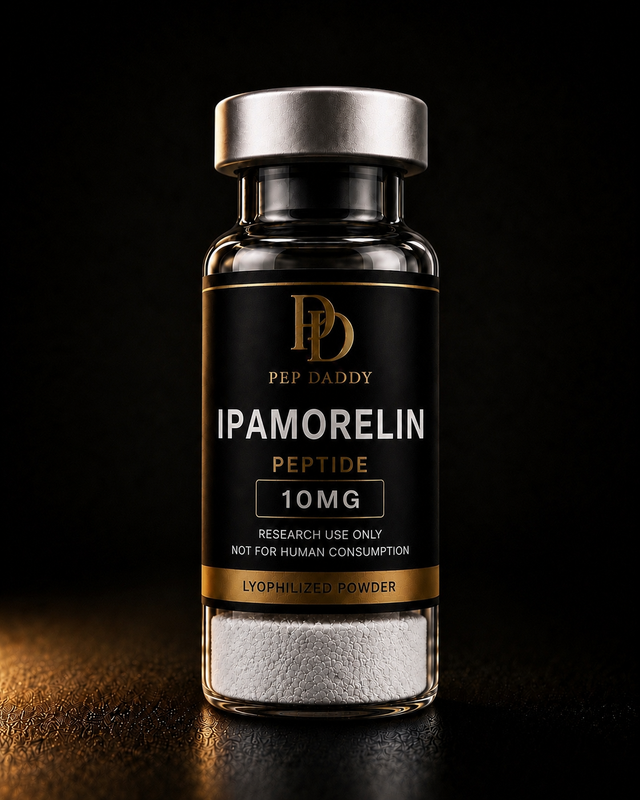
Ipamorelin 10 mg
- Study context
- A designed growth-hormone-secretagogue-class pentapeptide studied in receptor, endocrine, animal, and early clinical-development settings.
- Evidence boundary
- Development history and selective receptor findings do not establish long-term safety.
- Animal model
- Adult male Sprague-Dawley rats in a laparotomy and intestinal-manipulation postoperative-ileus model.
- Measured in that study
- Gastric emptying and small-intestinal transit.
- Research oversight
- The Methods report University of Oklahoma Health Sciences Center IACUC approval, protocol 09-046-H.
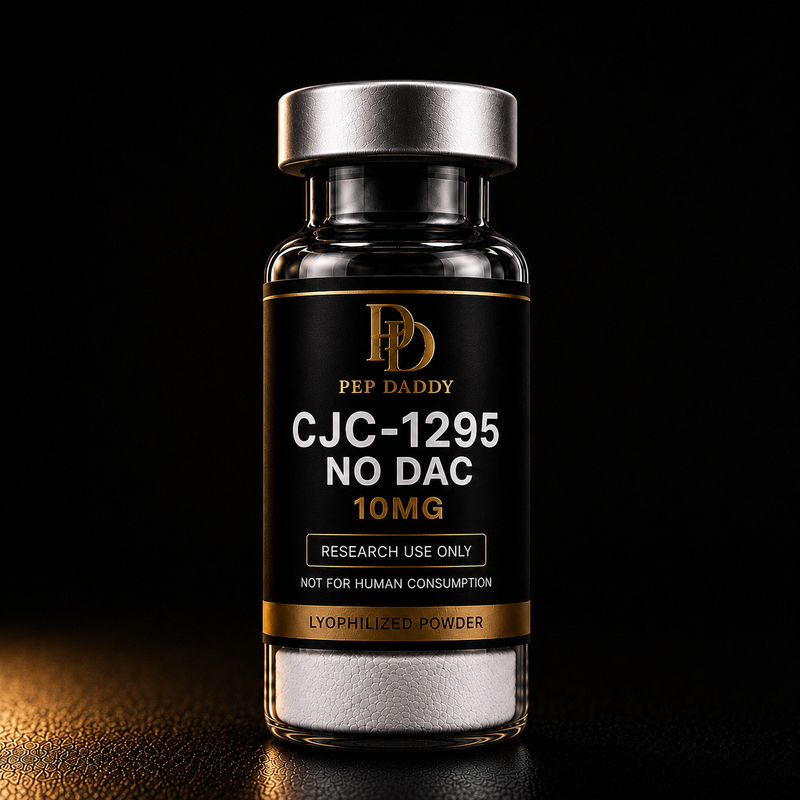
CJC-1295 (No DAC) 10 mg
- Study context
- A no-DAC GHRH(1-29) analogue discussed in growth-hormone-axis and receptor-signaling research.
- Evidence boundary
- The DAC and no-DAC forms are materially distinct; evidence for one should not be transferred to the other.
- Animal model
- Wistar rats weighing 200–300 g in a qualitative plasma-detection study.
- Measured in that study
- Qualitative detection and metabolic stability of the test GHRH analogue.
- Research oversight
- The Methods report ethical-committee approval and compliance with EU Directive 2010/63/EU.
The paper's sequence table identifies the characterized material as tetrasubstituted GRF(1–29)-NH₂ without an albumin-binding DAC group; findings are not transferred to DAC CJC-1295.
Primary paper: Knoop et al., Analytical and Bioanalytical Chemistry (2016) · PMID 26879649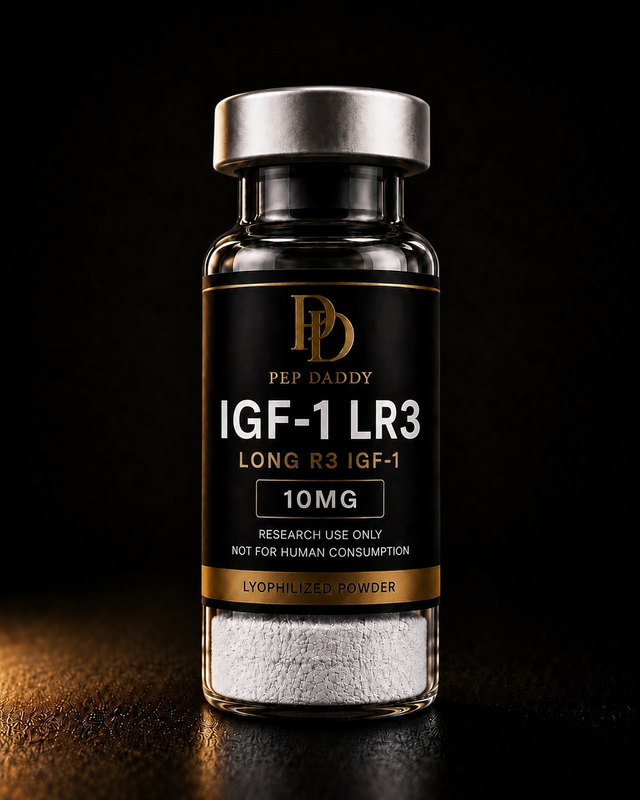
IGF1-LR3 1 mg
- Study context
- An engineered IGF-1 analogue represented chiefly in laboratory and animal growth-signaling research.
- Evidence boundary
- Its altered binding behavior makes extrapolation especially uncertain.
- Animal model
- Late-gestation growth-restricted fetal Columbia–Rambouillet mixed-breed sheep.
- Measured in that study
- Fetal growth and organ weights, circulating substrates and insulin, glucose-stimulated insulin secretion, and pancreatic measures.
- Research oversight
- The Methods report University of Colorado IACUC approval, an AAALAC-accredited facility, and ARRIVE 2.0 compliance.
Specialized literature
Neural, pineal & neuroendocrine research
Materials associated with neuroactive, sleep-model, pineal, and cellular-aging literature, where evidence quality varies substantially.
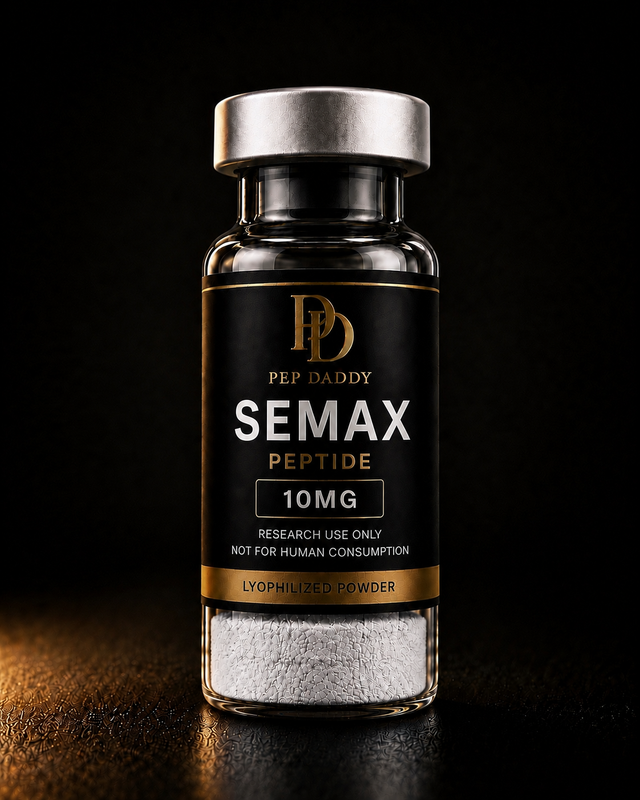
Semax 10 mg
- Study context
- An ACTH-fragment-derived heptapeptide represented in cell, animal, and regionally concentrated neuropharmacology literature.
- Evidence boundary
- Differences in study quality, replication, and regulatory context limit broad conclusions from that literature.
- Animal model
- Male Wistar rats in a bilateral photothrombotic prefrontal-cortex stroke model.
- Measured in that study
- Infarct and penumbra morphology, neuronal PGC-1α expression and nuclear translocation, and associated proteins.
- Research oversight
- The Methods report institutional ethics approval and compliance with Russian National Standard R-53434-2009 and EU Directive 2010/63/EU.
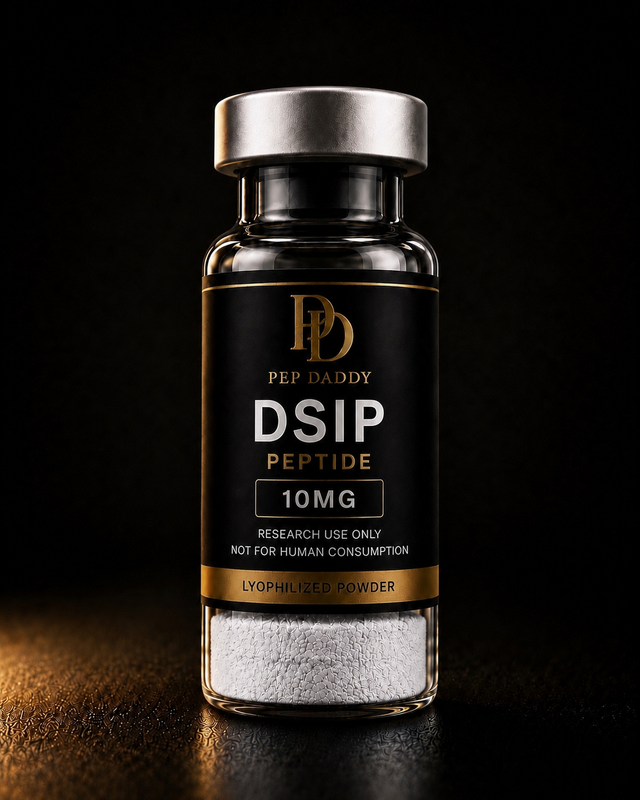
DSIP 10 mg
- Study context
- A nonapeptide with an older literature spanning sleep-model, neurochemical, and limited observational research.
- Evidence boundary
- Findings are inconsistent, and no definitive receptor is established.
- Animal model
- Adult male Sprague-Dawley rats in a focal-stroke middle-cerebral-artery-occlusion model.
- Measured in that study
- Motor coordination and balance, rotation asymmetry, and brain infarction volume.
- Research oversight
- The Methods report BIBCh RAS animal-care committee approval, IACUC protocol 683/19, EU Directive 2010/63/EU, and an AAALAC-accredited facility.
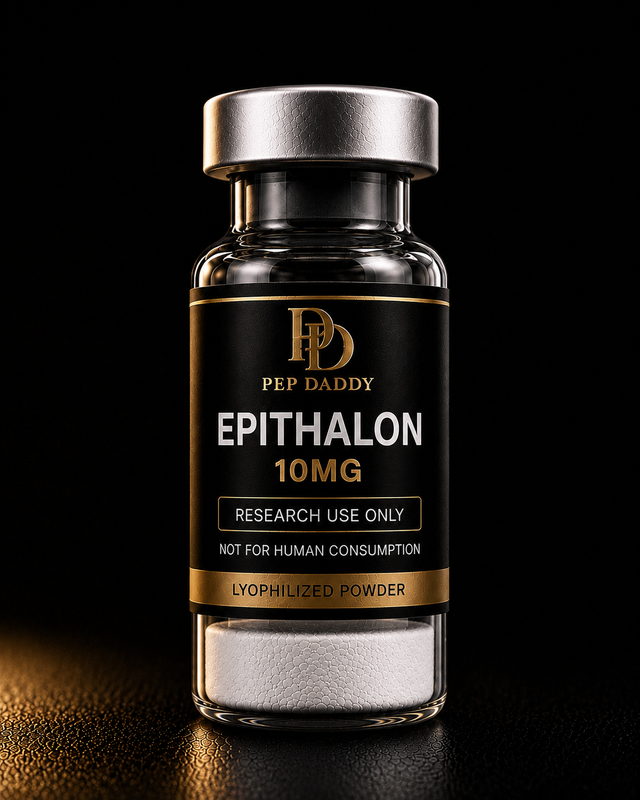
Epithalon 10 mg
- Study context
- The AEDG tetrapeptide, discussed in cell, animal, and aging-related literature concentrated in a limited set of research groups.
- Evidence boundary
- Independent replication is limited, so prominent mechanistic and lifespan claims require particular caution.
Exact-AEDG animal studies were located, but an explicit institutional animal-ethics approval or named care guideline was not verified in accessible primary full text, so no record is reproduced here.